1 Introduction
Since its beginnings, artificial intelligence has been the talk of the twenty-first century. Its ability to alter the dynamics of daily life has made it popular among blue-collar workers, researchers, business domain experts, and neuro-scientists. Different ways have been utilized to define AI, and in a majority of situations, Machine Learning (Statistical methods) principles have been applied. But, unlike traditional statistical methods, the new paradigm called Deep learning has been on the rise due to its ability to compute enormous amounts of multidimensional datasets. Deep learning configures prediction-based capabilities that rival or surpass human intelligence in a variety of ways, which is further supported by the fact that it can perform a very qualitative analysis of complex hierarchical data representations that a human mind may find difficult Nalisnick et al. (2019). Thus, there is a good chance that it will be used in business domain problems. This decade has seen the inception of a new framework known as Artificial General Intelligence(AGI). Elements such as ChatGPT and Midjourney have shifted the world in a new direction. In this present paper, authors attempt to show a futuristic strategy to solve finance related problems using data-driven Generative AI models.
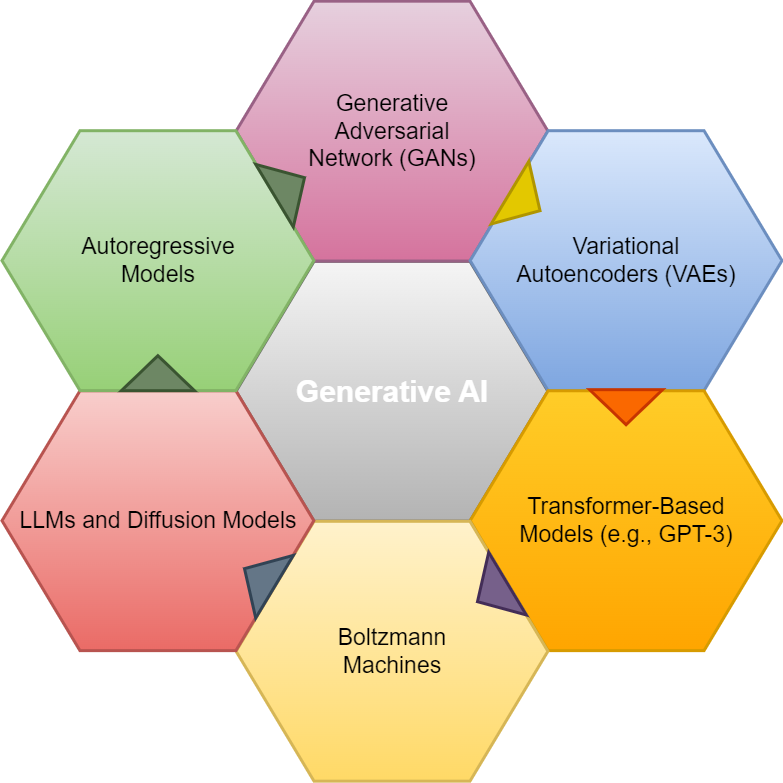
Figure 1: Different Generative AI Frameworks
Deep generative models are enthralling and crucial models of artificial intelligence, notably in machine learning. These models are intended to produce new data samples that seem similar to those in an existing dataset. They have risen to prominence due to their ability to generate realistic data in a variety of areas, including images, text, and others. Deep generative models are utilized in picture synthesis, text generation, data denoising, and anomaly detection, among other things. Through a sequence of invertible transformations, these models focus on changing a simple probability distribution into a more complex one. To represent complex, multi-modal data distributions, normalizing flows are usedSalakhutdinov (2015). Since the inception of ChatGPT by OpenAI, Generative AI has been the buzzword. Deep Generative models’ great power has been unleashed on humanity to address resource-limited complex issues with a substantially lower time complexityKalla et al. (2023). Generative AI’s major goal is to generate data that is indistinguishable from real data. It is a sort of model that can generate new content in terms of writing, images, and music. Most of this kind of power comes from the family of deep unsupervised learning. Deep unsupervised methods employ complex mechanisms to extract information from the latent representation of data. This family of algorithms can learn complicated patterns, allowing them to create more realistic and imaginative content. It is a fast-developing field that blends unsupervised learning techniques with deep learning models to construct generative products. These systems are capable of producing fresh and meaningful data. Numerous methods, including Autoregressive models, Variational Autoencoders (VAEs), and Generative Adversarial Networks (GANs), are part of deep generative AI Wang (2023). Finding and comprehending the underlying structures and patterns in the data is the aim of these models. These structural approaches enable them to generate new samples that closely mimic the original data distribution. In domains including computer vision, natural language processing, medication discovery, art, product design, financial forecasting, and music production, to mention a few, the capacity to produce realistic data has far-reaching implications.
These models have the potential to revolutionize creative industriesLi et al. (2023a) by assisting in data augmentation, improving simulation settings, and aiding in the interpretation of complex data distributions. Table 4 shows generative models where audio data is taken as a source and Table 3 shows generative models where text data is taken as a source respectively. This paper scores some quick ideas about how these AI models will attempt to leave their mark throughout time. The concept of how specific company domains might achieve exponential growth by utilizing the aforementioned frameworks along with their limitations shall be discussed in this paper. Potential weaknesses have been noted, as have potential opportunities. A network of Fortune 500 firms as shown in Fig 2 is also provided as a Node-Link graph. The majority of these organizations have the means to access a deployable Gen AI model for further market expansion. Another Node - Link diagram is shown to visualize the importance of generative analytics for startups and big tech companies in Fig 3. Through real-world solutions, the article conceptualizes the innovative idea of futuristic technologies. Attempts to broaden the research domains by providing an insight into existing research gaps and how Generative AI will transform society while minimizing the distance between cyberspace and real space shall also be explored. The crux of the study will be how the practical application of the aforementioned methods will have a positive impact on societyYe and Yue (2023). The main focus in this paper is on how finance-related services are going to be transformed by using AI models.
The remaining paper is organized as follows. In sections 2 and 3, various aspects of methodology and why Generative AI is going to be good for business is discussed. In section 4, different kinds of generative foundation models have been described. In section 5, opportunities in finance are explored through different working mechanisms. In section 6 and 7, real-world solutions along with the effect of generative AI are discussed. In section 8, the limitations of these models is described. In section 9, suggestions are provided for entrepreneurs and startups. Some possible future research directions are also listed. The last section summarises the observations with concluding remarks.
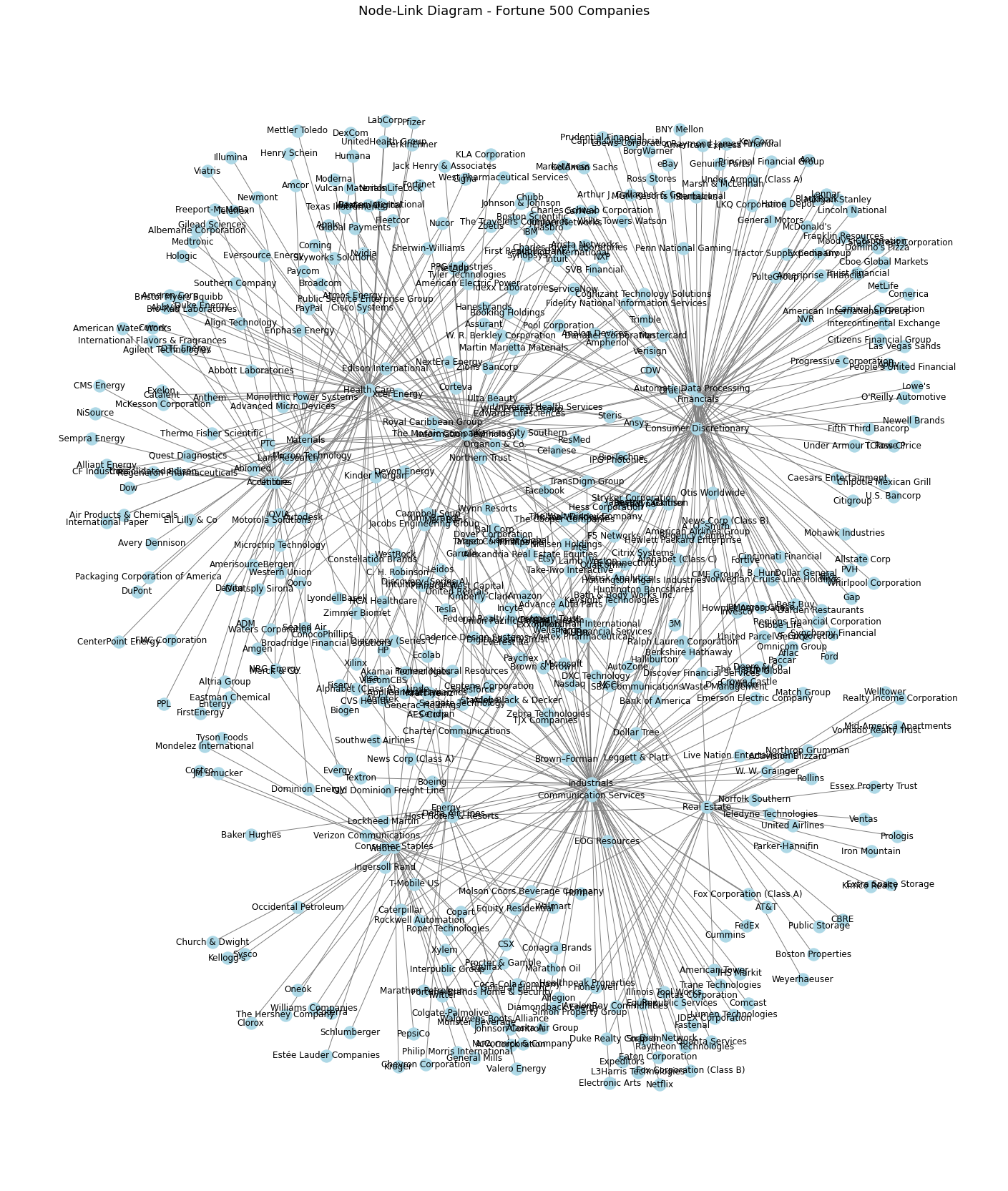
Figure 2: Node - Link diagram for Fortune 500 companies
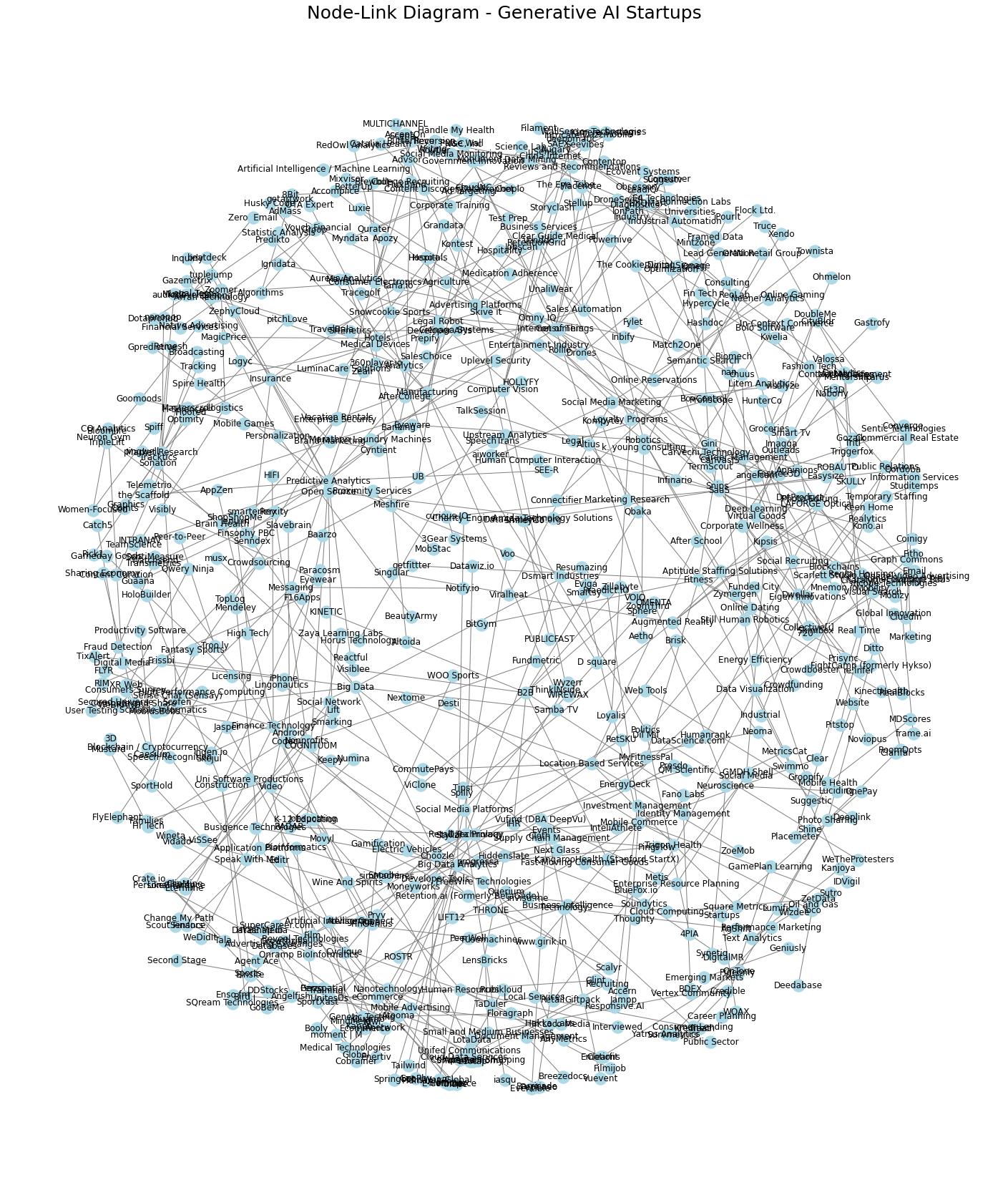
Figure 3: Node - Link diagram for Generative AI startups