Appendix Appendix G Additional Results: Symmetric Kitagawa Decomposition and the balanced-cell Sample
This appendix reports two additional sets of decomposition results. First, we present results based on the symmetric two-fold Kitagawa decomposition (Kitagawa, 1955). Second, we restrict the sample to balanced job cells that are observed in every quarter and re-estimate the decomposition on this balanced-cell sample. The results from both alternative decompositions are consistent with our main findings.
G.1 Symmetric two-fold Kitagawa decomposition
Our main specification uses the three-fold counterfactual Kitagawa decomposition in Equation 8, which separates the overall change in aggregate exposure into a composition effect, a within-cell exposure effect, and an interaction effect. As an alternative, we also consider the symmetric two-fold Kitagawa decomposition (Kitagawa, 1955), which absorbs the interaction term equally into the composition and within-cell components.
Let aggregate exposure in quarter $t$ be
$$ \bar{E}_{t}=\sum_{c}w_{ct}E_{ct}, $$
where $w_{ct}$ denotes the posting share of cell $c$ in quarter $t$, and $E_{ct}$ denotes average exposure within that cell. Using 2021 as the fixed baseline, the symmetric two-fold decomposition can be written as
$$ \bar{E}_{t}-\bar{E}_{0}=\underbrace{\sum_{c}(w_{ct}-w_{c,0})\frac{E_{ct}+E_{c,0}}{2}}_{\text{Composition effect}}+\underbrace{\sum_{c}(E_{ct}-E_{c,0})\frac{w_{ct}+w_{c,0}}{2}}_{\text{Within-cell exposure effect}}. $$
Relative to the three-fold decomposition, this formulation provides a more parsimonious two-part breakdown of the change in aggregate exposure by allocating the interaction term equally to the composition and within-cell exposure effects. However, unlike the three-fold specification, it cannot separately capture the interaction effect, namely the component arising when reallocation across job cells and within-cell exposure changes occur simultaneously.
Figure G7 reports the results from the symmetric two-fold decomposition. The pattern is consistent with our main findings: labor-demand adjustment to generative AI operates through both composition shifts and within-cell exposure changes, with both margins becoming more salient after mid-2023.
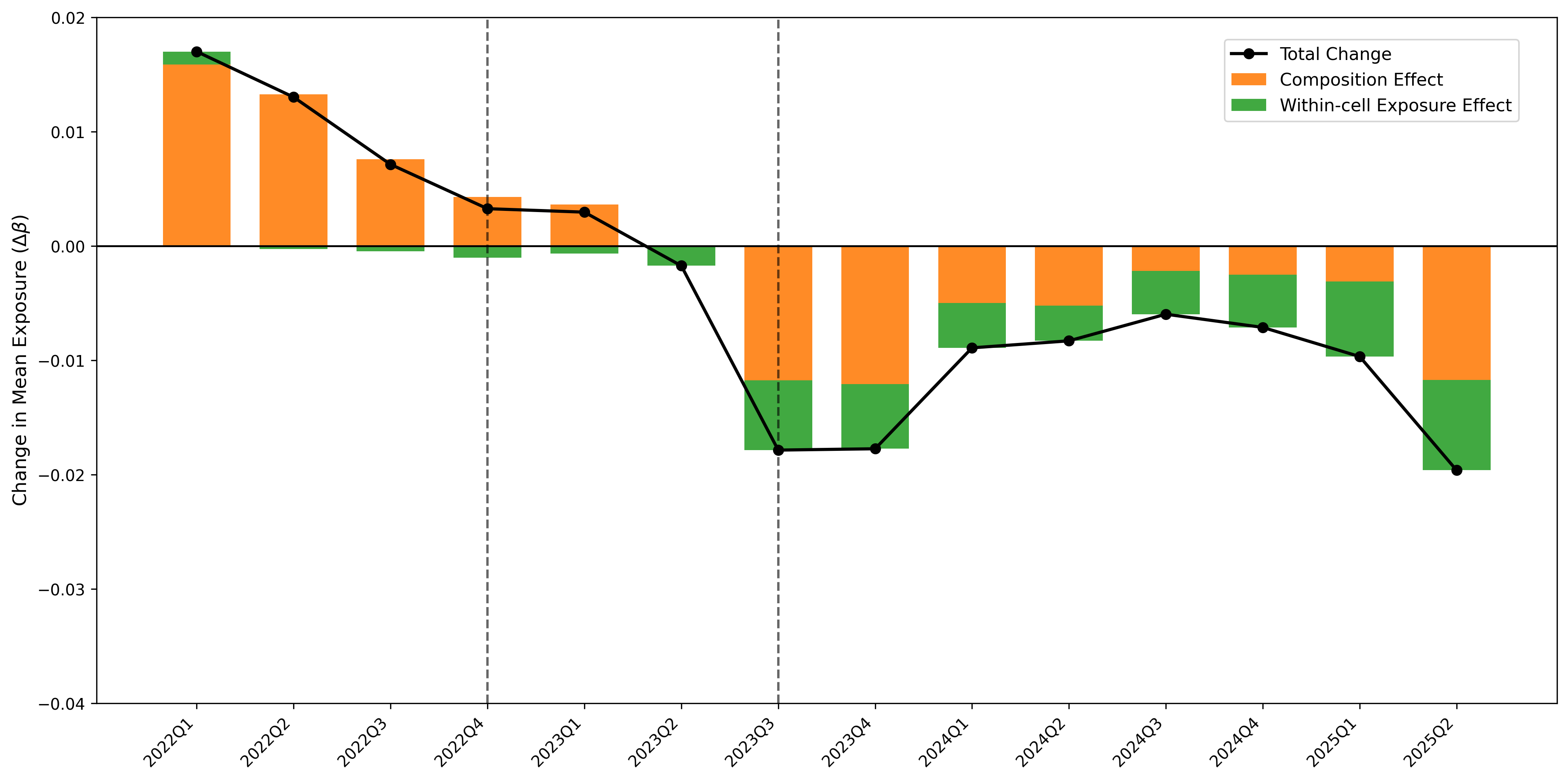
Figure G7: Symmetric Two-Fold Kitagawa Decomposition of Changes in Aggregate Exposure
G.2 Balanced-cell sample
A potential concern in decomposition exercises is that changes in aggregate exposure may partly reflect entry and exit of job cells over time. To address this concern, we re-estimate the decomposition using a balanced-cell sample that includes only cells observed in every quarter of the sample period. We then apply the same three-fold decomposition as in Equation 8 to this restricted sample.
Figure G8 presents the results based on the balanced-cell sample. The results remain consistent with our main findings. Even when restricting the analysis to cells that are present in every quarter, labor-demand adjustment to generative AI is reflected in both composition shifts and within-cell exposure changes, especially after mid-2023.
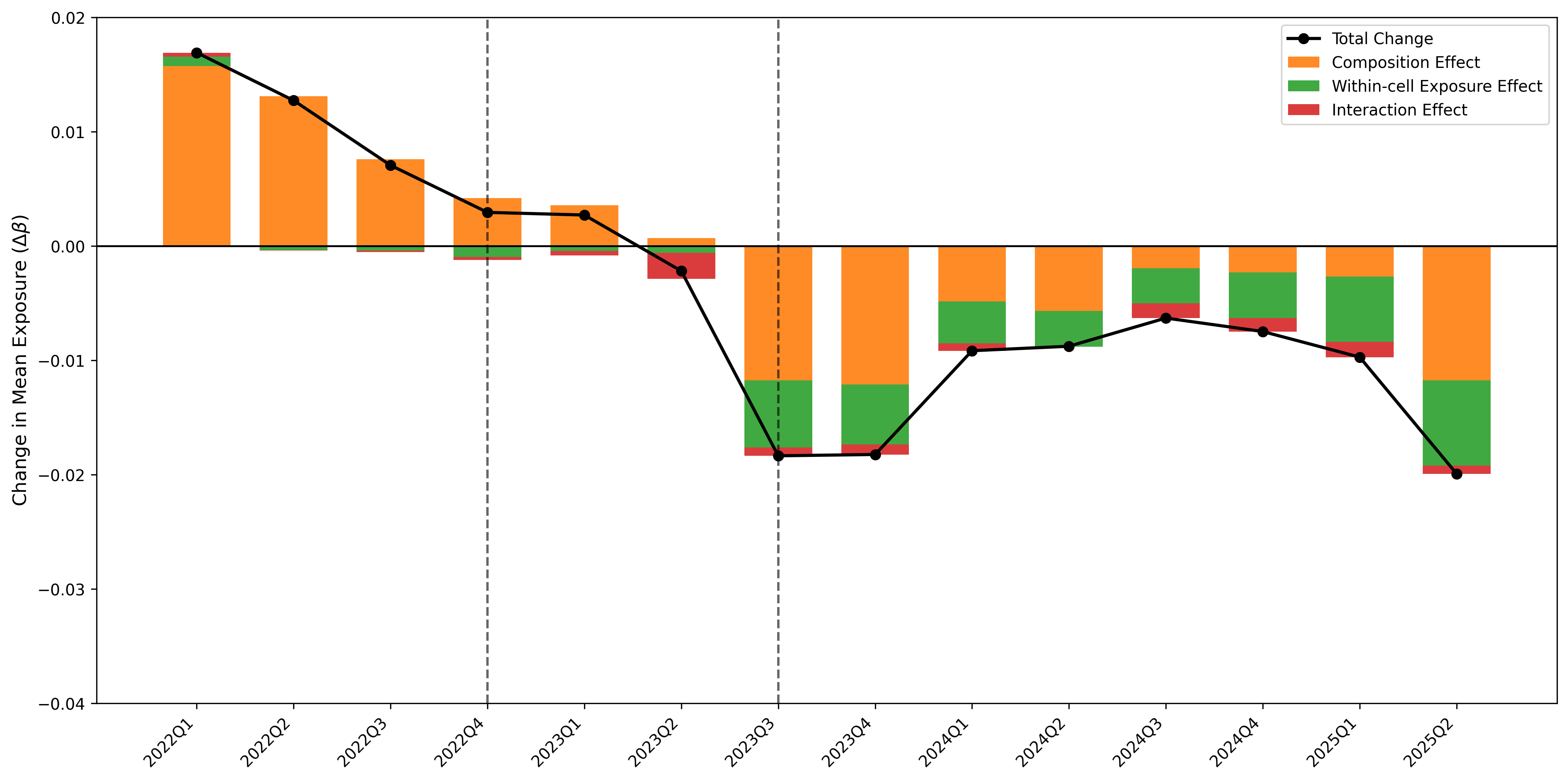
Figure G8: Three-Fold Kitagawa Decomposition Using the Balanced-cell Sample